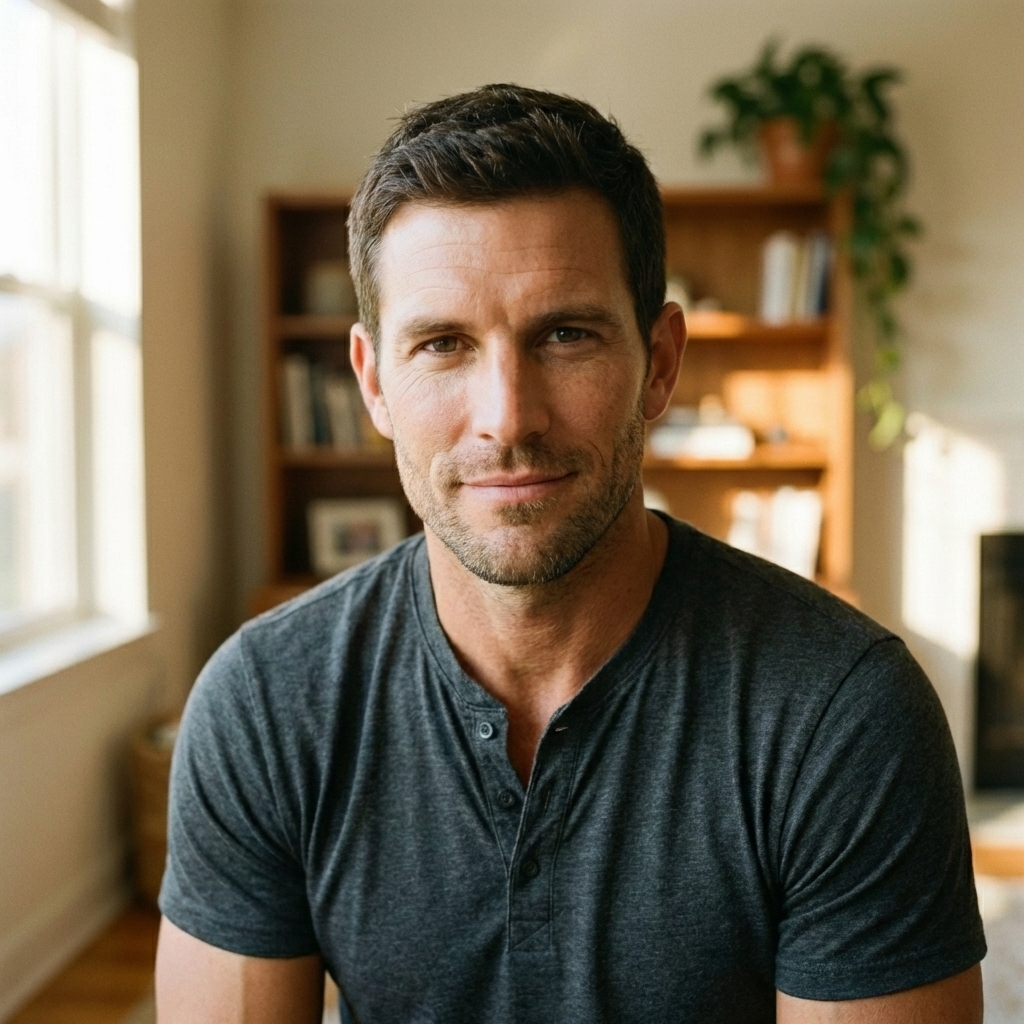
Marcus Goldstein
I'm a researcher with a PhD in Nutritional Sciences, specializing in hormonal regulation — and this is where I write about what I've learned. This blog exists because there's an enormous gap between what clinical research actually says about male hormonal health and what ends up in headlines, supplement ads, and locker-room advice. I write about testosterone, the science behind it, and what actually works versus what's just marketing noise.
Why Testosterone
I chose this field because of a single, obsessive idea: testosterone is the master hormone that defines male biology. Not in the way fitness influencers talk about it — in a molecular, everything-traces-back-to-this way. Muscle mass, mental clarity, drive, confidence, body composition, libido, even how you carry yourself in a room. It all routes through one molecule.
That fascinated me in a way nothing else in science ever had. I didn't want to study nutrition in the abstract. I wanted to understand the machinery behind what makes men function — at the deepest level I could reach. That's what pulled me into a PhD program and specifically into hormonal regulation research. I wanted to map the system: how testosterone is produced, how it's regulated, what disrupts it, and what — if anything — can be done about it when things go wrong.
I pursued my doctorate out of genuine intellectual obsession, not because I had a problem to solve. At the time, I was healthy, sharp, training regularly. Testosterone was my research subject, not my personal crisis. That came later.
Then It Became Personal
Through my twenties I was fine. Normal energy, decent shape, nothing to worry about. I was studying testosterone academically while my own levels were presumably humming along in the background.
Then, around 30 or 31, things started shifting. It was subtle at first — a little more fatigue, a little less edge in the gym. Then it wasn't subtle at all. Progressive loss of muscle tone despite consistent training. Soft fat settling around my midsection that wouldn't budge. Brain fog rolling in by mid-afternoon. Confidence eroding. Libido fading. A slow, creeping sense of becoming less — less present, less sharp, less myself.
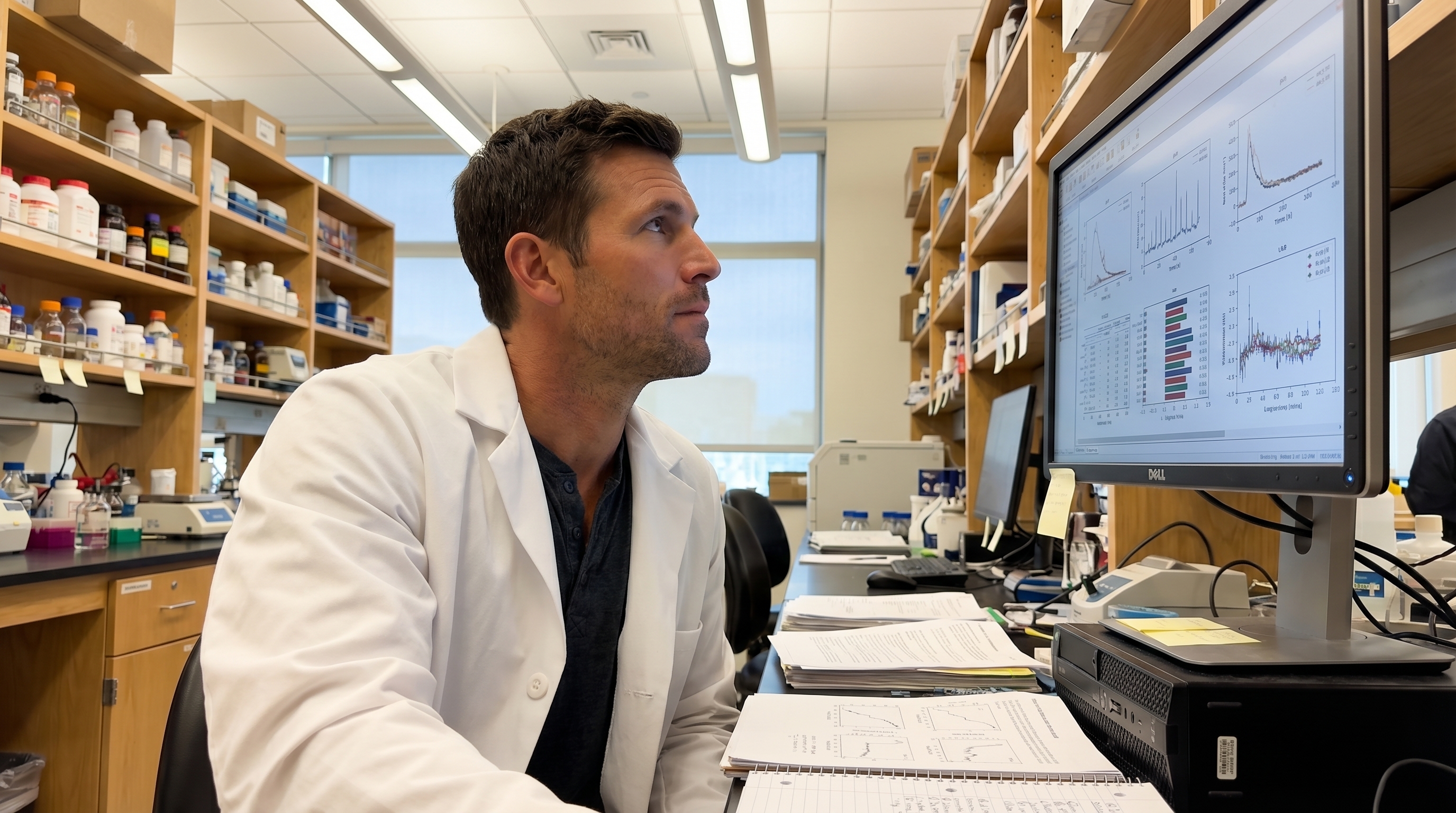
The irony was brutal. I'd spent years studying the hormone that makes men function — and my own body was running out of it. I blamed stress, workload, aging. By 31, I couldn't ignore it anymore. When I finally ran my own bloodwork, the number confirmed what I'd been afraid of: I was well below the normal range for my age.
That changed everything. The research wasn't theoretical anymore. I had the scientific framework, the training, the lab access — and for the first time, a deeply personal reason to use all of it. I've written about the full story, including the failures, the dead ends, and what finally worked, in a separate article.
What I Write About
Most of what I publish here falls into a few categories:
- The gap between clinical research and mainstream health advice. Peer-reviewed findings don't translate cleanly into blog posts and product labels. I try to bridge that gap honestly, even when the answer is "we don't know yet."
- Evidence-based analysis of supplements and interventions. I read methodology sections, not press releases. If a compound has three underpowered studies and a lot of hype, I'll say so.
- Personal experiments and bloodwork tracking. I've been running my own labs for years now, testing interventions on myself and documenting the results. Not as proof — as data points worth sharing.
- What the hormonal health industry gets wrong. There's a lot of money in telling men their testosterone is low and selling them something. I try to separate the signal from the noise.
My Approach
I read methodology sections before I read conclusions. If a study uses 12 participants, no control group, and a self-reported outcome measure, I don't care what the headline says. That habit — trained into me across years of academic research — shapes everything I write here.

I track my own biomarkers obsessively. I've built a personal dataset that spans years of bloodwork, supplement trials, lifestyle changes, and their measurable effects. When I write about something working or not working, I'm usually referencing my own labs alongside the published literature.
I'm not selling anything on this site. I don't run ads, I don't have affiliate deals driving my recommendations. When I write about a compound or a protocol, it's because the evidence — clinical and personal — convinced me it's worth discussing. And when the evidence doesn't support something, I say that too, even if it's popular.
If you're a man who's felt like something is off — less energy, less drive, less of the edge you used to have — but you can't quite name what changed, you're in the right place. I've been there. And I've spent the better part of a decade learning why it happens and what can actually be done about it.